
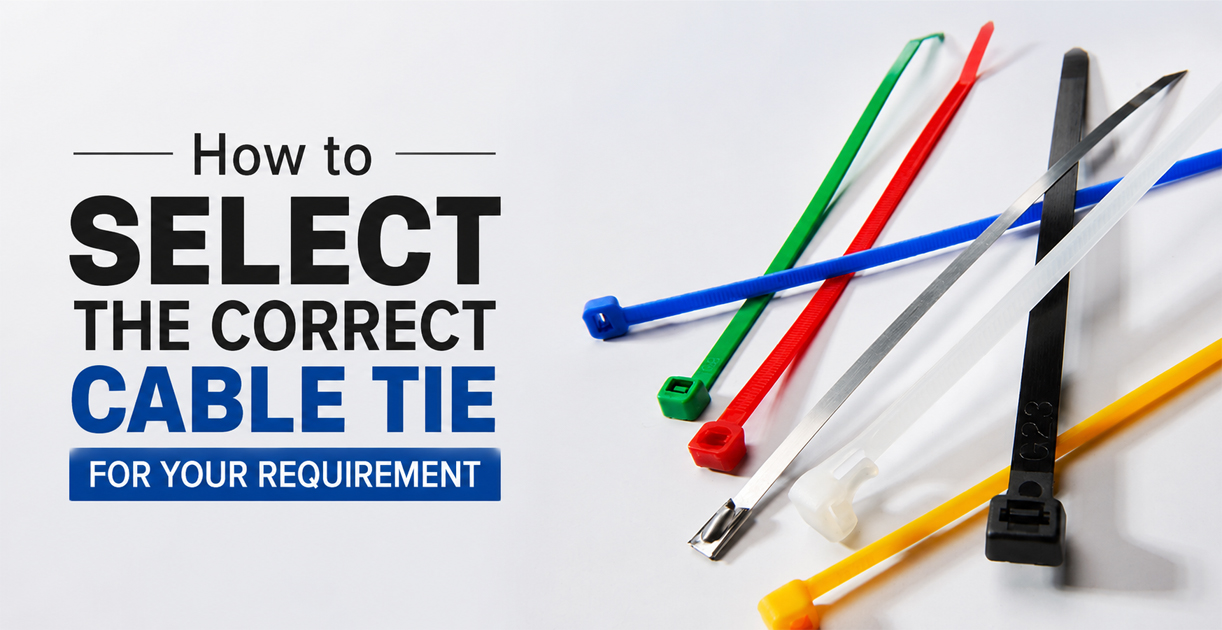

Choosing the right cable tie is essential for safe and efficient cable management. A cable tie may look like a simple product, but selecting the wrong type can lead to loose bundling, cable damage, or even safety hazards.
Whether you are working in electrical installations, industrial wiring, automotive systems, or home organization, understanding how to choose cable ties correctly ensures long-lasting performance and reliability.
- Types of Cable Ties You Should Know
Understanding types of cable ties is the first step in selection:
Standard Nylon Cable Ties
- Most commonly used
- Ideal for general indoor applications
- Cost-effective and easy to use
UV Resistant Cable Ties
- Designed for outdoor use
- Protects against sunlight degradation
- Long-lasting performance in harsh environments
Heat Resistant Cable Ties
- Suitable for high-temperature environments
- Used in industrial machinery and electrical panels
- Maintains strength under heat exposure
Stainless Steel Cable Ties
- Extremely strong and durable
- Resistant to corrosion and chemicals
- Used in heavy-duty industrial applications
Releasable Cable Ties
- Can be opened and reused
- Best for temporary installations
- Cost-efficient for maintenance work
- How to Choose Cable Tie Size
Cable tie size plays a crucial role in performance.
Small Cable Ties (100–150 mm)
- For thin wires and home use
- Light bundling applications
Medium Cable Ties (200–300 mm)
- Suitable for electrical panels
- Office and standard industrial use
Large Cable Ties (300 mm and above)
- Used for heavy cables and industrial wiring
- High bundle capacity
👉 Always check loop diameter and tensile strength before selection.
- Material Selection Matters
The material of cable ties directly impacts durability:
- Nylon 6/6:General purpose, strong and flexible
- UV Stabilized Nylon:Best for outdoor environments
- Stainless Steel:Maximum strength and heat resistance
Choosing the right material ensures long-term cable safety and performance.
- Indoor vs Outdoor Cable Tie Selection
Indoor Use
- Standard nylon cable ties are sufficient
- Focus on flexibility and ease of use
Outdoor Use
- UV resistant cable ties are essential
- Weatherproof and heat stable materials recommended
- Importance of Temperature Resistance
In industrial or high-heat environments:
- Use heat resistant cable ties
- Avoid standard plastic ties in machinery zones
- Ensure safety compliance in electrical systems
- Locking Strength and Security
Cable ties come with different locking mechanisms:
- Standard lock:Permanent fastening
- Double lock system:Extra grip for heavy loads
- Releasable lock:Adjustable and reusable
Choose based on whether you need permanent or temporary installation.
- Color Coding for Cable Management
Color-coded cable ties help in:
- Identifying cable groups easily
- Organizing electrical systems
- Improving maintenance efficiency
Black cable ties are commonly UV resistant, while colored ties are used for labeling and grouping.
- Safety Tips for Cable Tie Usage
- Always check tensile strength rating
- Avoid over-tightening cables
- Use correct size for bundle diameter
- Choose fire-resistant options for electrical applications
Conclusion
Selecting the correct cable tie is not just about convenience—it is about safety, durability, and efficiency. By understanding the types, materials, sizes, and applications, you can choose the perfect cable tie for any requirement.
A well-chosen cable tie ensures strong cable management, reduced maintenance issues, and long-lasting performance in both indoor and outdoor environments.

