
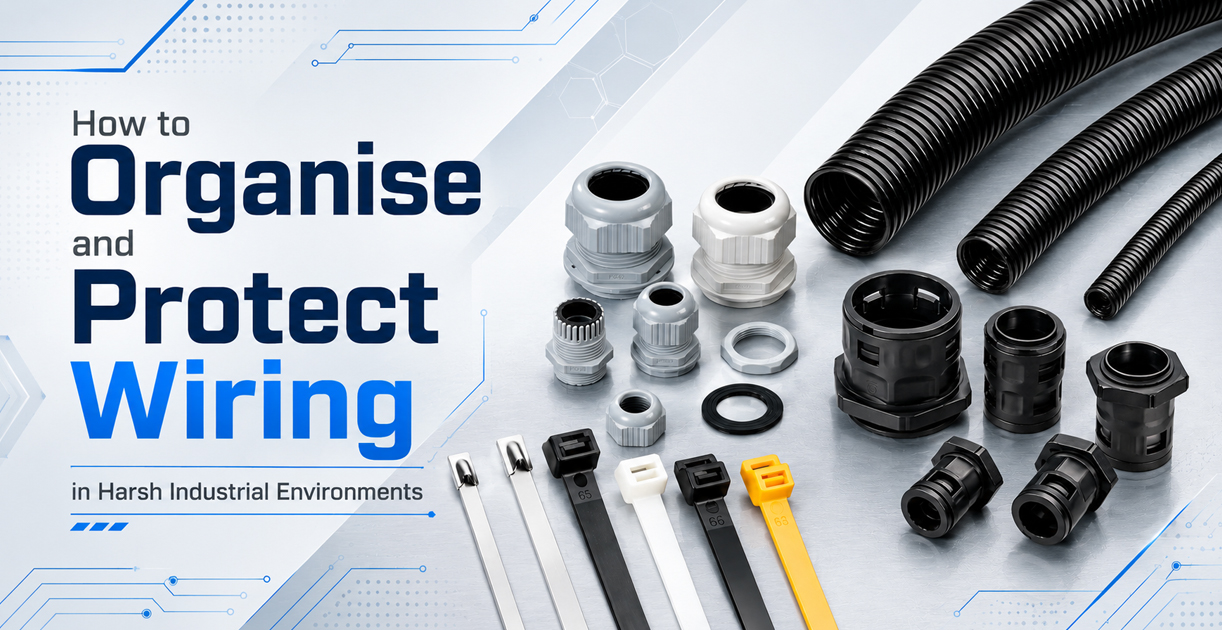

In industries where uptime, safety, and efficiency are critical, wiring systems often face some of the toughest operating conditions. From manufacturing plants and power facilities to railways and construction sites, cables are constantly exposed to dust, moisture, chemicals, UV radiation, vibration, and extreme temperatures. Without proper industrial cable management, these factors can lead to cable damage, equipment failures, costly downtime, and safety risks.
The Importance of Effective Cable Management
A well-organized wiring system does more than improve appearance—it enhances operational reliability and simplifies maintenance. Proper cable routing and protection reduce the risk of accidental damage, overheating, and electrical faults while making inspections and troubleshooting faster and more efficient.
Key Strategies for Protecting Industrial Wiring
Use Durable Cable Ties and Fasteners
High-quality cable ties are essential for securing and bundling cables in industrial environments. Heavy-duty, UV-resistant, and weather-resistant cable ties help maintain cable organization while preventing movement caused by vibration or mechanical stress.
Install Protective Conduits
Conduits provide an additional layer of protection against moisture, dust, chemicals, and physical impact. Flexible conduits are ideal for dynamic applications, while rigid conduit systems offer superior protection in fixed installations.
Optimise Cable Routing
Proper cable routing is crucial for long-term reliability. Avoid running cables near sharp edges, heat-generating equipment, or moving machinery. Separating power and communication cables also helps reduce electromagnetic interference and improves system performance.
Choose Industrial-Grade Components
Using industrial-grade cable management products such as cable glands, conduit fittings, mounting bases, and cable markers ensures durability in demanding environments. These components are specifically designed to withstand harsh operating conditions and provide long-term performance.
Schedule Regular Maintenance
Routine inspections help identify wear, loose connections, or damaged cables before they become major issues. Preventive maintenance extends cable life, improves workplace safety, and reduces unexpected equipment failures.
Conclusion
Effective industrial wiring protection is essential for maintaining safe, reliable, and efficient operations. By combining high-quality cable ties, protective conduits, proper cable routing, and regular inspections, businesses can significantly reduce downtime and increase the lifespan of their electrical infrastructure. Investing in professional cable management solutions today helps create a safer and more productive industrial environment for the future.

