
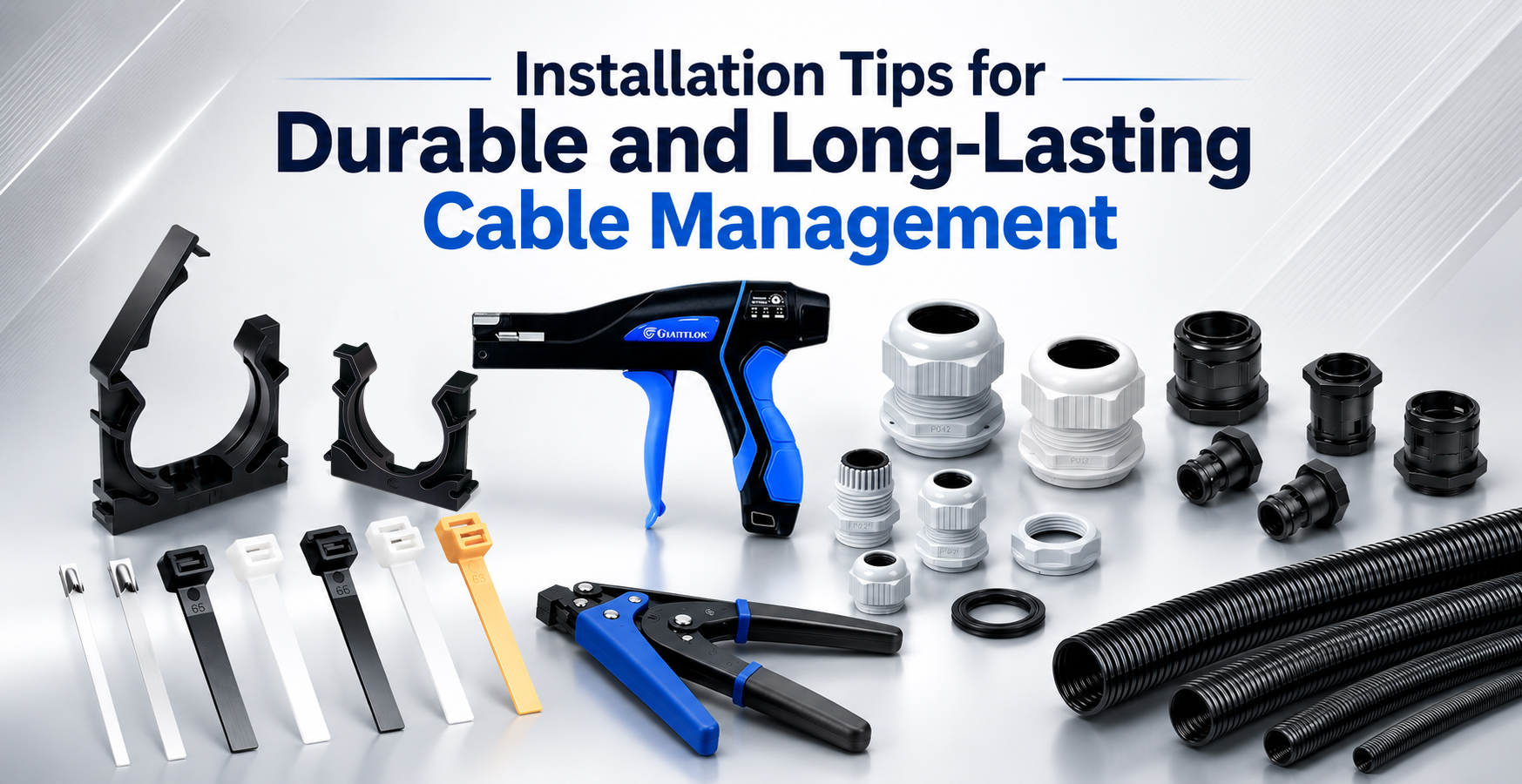

Effective cable management is more than just organizing wires—it plays a crucial role in improving safety, enhancing system reliability, and extending the lifespan of electrical installations. Whether in industrial facilities, commercial buildings, data centers, or residential projects, proper cable management ensures a neat, secure, and professional setup. Here are some essential installation tips to achieve durable and long-lasting cable management.
- Choose the Right Cable Management Products
The foundation of a reliable cable management system begins with selecting high-quality products. Cable ties, mounting bases, cable clips, and conduits should be chosen according to the application environment. For outdoor installations, UV-resistant cable ties are recommended, while stainless steel cable ties provide superior performance in harsh or corrosive environments.
- Avoid Over-Tightening Cable Ties
One of the most common installation mistakes is tightening cable ties excessively. Over-tightening can damage cable insulation, restrict cable flexibility, and increase the risk of failure over time. Cable ties should be secured firmly enough to hold cables in place while allowing slight movement to prevent unnecessary stress.
- Maintain Proper Cable Routing
Careful cable routing is essential for both performance and maintenance. Avoid sharp bends and excessive twisting, as these can weaken cables and affect signal or power transmission. Following recommended bend radius guidelines helps preserve cable integrity and ensures long-term reliability.
- Separate Different Types of Cables
Power cables, data cables, and communication cables should be routed separately whenever possible. Proper separation reduces electromagnetic interference (EMI), improves system performance, and simplifies troubleshooting and future maintenance activities.
- Use Adequate Support Points
Long cable runs require sufficient support to prevent sagging and strain. Installing cable ties, clamps, or mounting bases at regular intervals distributes cable weight evenly and minimizes stress on connection points. This practice significantly increases the durability of the entire cable management system.
- Consider Environmental Conditions
Environmental factors such as temperature, moisture, chemicals, and UV exposure can impact cable management products over time. Selecting materials specifically designed for the installation environment helps maintain performance and prevents premature deterioration.
- Plan for Future Expansion
A well-designed cable management system should accommodate future upgrades and additional cables. Leaving adequate space in cable trays, conduits, and bundles simplifies modifications and prevents overcrowding that can lead to maintenance challenges.
Conclusion
Durable and long-lasting cable management requires a combination of quality products, proper installation techniques, and thoughtful planning. By choosing suitable cable management solutions, maintaining correct cable routing, and considering environmental conditions, businesses can improve safety, enhance efficiency, and extend the lifespan of their electrical infrastructure. Investing in proper cable management today ensures reliable performance and easier maintenance for years to come.

