
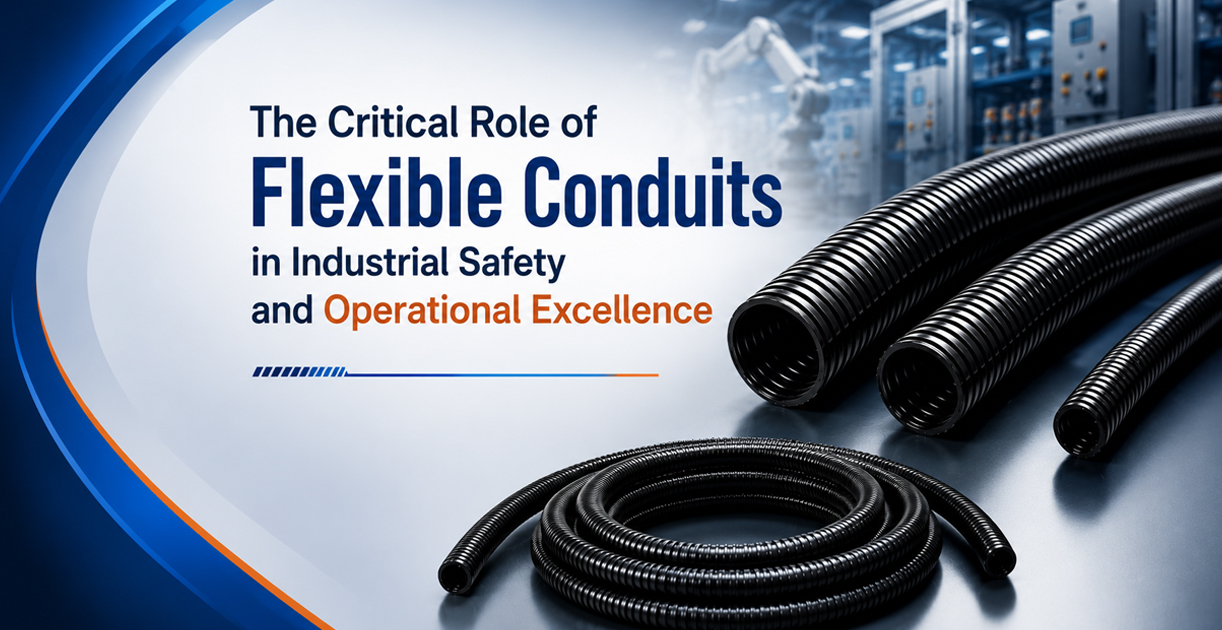

In today’s industrial landscape, electrical systems are the backbone of manufacturing, automation, and infrastructure. From powering production lines to supporting complex control systems, every electrical connection plays a crucial role in maintaining safe and efficient operations. However, these cables are constantly exposed to dust, moisture, vibration, chemicals, and mechanical stress, making reliable cable protection essential. This is where flexible conduits become an indispensable part of every modern electrical installation.
Designed to protect and organize electrical wiring, flexible conduits provide a secure pathway for cables while allowing the flexibility required in dynamic industrial environments. Whether used in manufacturing plants, automation systems, renewable energy projects, or commercial facilities, they help improve electrical safety, reduce maintenance, and ensure long-term system reliability.
Why Flexible Conduits Are Essential for Industrial Safety
Industrial environments present numerous challenges that can damage exposed electrical cables. Continuous machine movement, heavy equipment, fluctuating temperatures, and exposure to oil, dust, and moisture can gradually weaken cable insulation, increasing the risk of electrical failures and costly downtime.
Flexible conduits provide an additional layer of protection by shielding cables from abrasion, impact, corrosion, and environmental contaminants. By reducing cable damage, they help minimize electrical hazards, improve workplace safety, and support compliance with industrial safety standards.
How Flexible Conduits Improve Operational Efficiency
Operational excellence depends on reliable electrical infrastructure. A damaged cable can interrupt production, delay maintenance schedules, and increase operational costs. Installing industrial flexible conduits helps extend cable life by protecting wiring from continuous movement and mechanical stress.
Their flexible design also simplifies cable routing around machinery, through confined spaces, and within complex electrical panels. This not only reduces installation time but also makes inspection, maintenance, and future upgrades faster and more efficient.
For industries focused on maximizing uptime, effective cable management solutions are a practical investment that supports long-term productivity.
Common Applications of Flexible Conduits
Thanks to their versatility and durability, flexible conduits are widely used across multiple industries, including:
- Manufacturing and industrial automation
- Electrical control panels and switchboards
- Robotics and CNC machinery
- Renewable energy and solar installations
- Railway and transportation infrastructure
- HVAC systems
- Commercial and industrial buildings
- Process plants and heavy engineering facilities
Their ability to protect electrical wiring in demanding environments makes them a preferred choice for engineers, contractors, and maintenance professionals.
Choosing the Right Flexible Conduit
Selecting the appropriate flexible conduit depends on the operating environment and application requirements. Factors such as flexibility, mechanical strength, resistance to moisture, chemicals, UV exposure, and temperature variations should be carefully evaluated. A high-quality conduit not only protects electrical wiring but also reduces maintenance costs and improves the overall reliability of the electrical system.
Why Giantlok India?
At Giantlok India, we manufacture premium-quality flexible conduit solutions engineered for demanding industrial applications. Our products are designed to deliver reliable cable protection, excellent flexibility, and long-lasting performance, helping industries build safer, more efficient, and dependable electrical systems.
Conclusion
Flexible conduits are much more than protective sleeves for electrical cables—they are a critical component of industrial safety and operational excellence. By safeguarding electrical wiring from harsh environmental conditions and mechanical damage, they help reduce downtime, improve maintenance efficiency, and enhance the reliability of modern electrical installations. Investing in high-quality flexible conduit systems is a smart step toward creating safer workplaces, optimizing productivity, and ensuring long-term operational success.

