
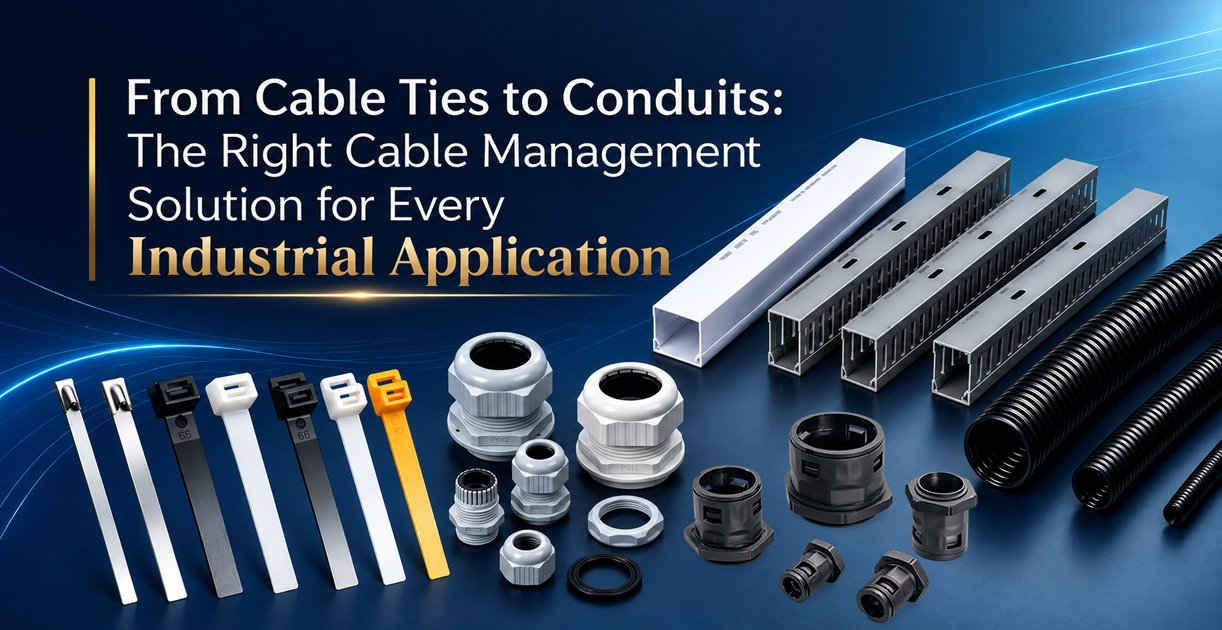

In modern industrial environments, industrial cable management plays a vital role in maintaining the safety, performance, and reliability of electrical systems. With increasing automation and complex wiring, proper cable management keeps cables organized, protected, and easy to maintain.
From cable ties and flexible conduits to cable glands and conduit accessories, the right solution depends on factors such as cable movement, heat, moisture, chemicals, UV exposure, and mechanical stress. Choosing the right cable management solutions ensures a safer, more organized, and reliable electrical installation.
Cable Ties: A Simple Solution for Organized Wiring
For basic cable bundling, securing, and routing, industrial cable ties are one of the most practical cable management solutions. They help keep wires securely grouped, reduce cable clutter, and make electrical installations easier to inspect and maintain.
Different industrial environments may require different types of cable ties. For example:
- UV-resistant cable ties are suitable for outdoor applications and areas exposed to sunlight.
- Heat-resistant cable ties are designed for applications involving elevated temperatures.
- Metal-detectable cable ties can be useful in specialized industries where contamination detection is important.
- Different materials and specifications can be selected according to the installation environment and performance requirements.
Choosing the right cable tie material and specification can improve durability and help ensure long-term cable management performance.
Flexible Conduits: Protecting Cables in Demanding Environments
Cable ties are excellent for organization, but they do not provide sufficient protection when cables are exposed to movement, abrasion, dust, moisture, chemicals, or mechanical stress.
This is where flexible cable conduits provide an important advantage.
Flexible conduits create a protective layer around cables while allowing them to bend and move with machinery. They are particularly useful in:
- Industrial automation systems
- Manufacturing machinery
- Control panels
- Robotic and moving equipment
- Electrical installations
- Machinery with continuous cable movement
For applications where cables are exposed to vibration or repeated movement, selecting a suitable flexible conduit can help reduce mechanical stress and improve cable protection.
Cable Glands: Secure and Protected Cable Entry
Protecting the cable itself is only part of an effective cable management system. The point where a cable enters an enclosure, panel, or machine also needs to be properly secured.
Cable glands provide a secure cable entry while helping with strain relief and cable protection. They are commonly used with electrical enclosures, control panels, machines, and other industrial equipment.
When selecting a cable gland, important factors include:
- Cable diameter and size
- Enclosure requirements
- Environmental conditions
- Required protection level
- Mechanical and operational requirements
Using the correct cable gland helps create a more secure and dependable electrical installation.
Building a Complete Industrial Cable Management System
A reliable industrial cable management system often combines multiple products, including cable ties, flexible conduits, cable glands, conduit fittings, connectors, brackets, and wiring ducts. The right combination depends on the application and installation environment.
For machinery, flexible conduits can protect cables, while cable glands, ties, and brackets ensure secure and organized routing. In control panels, wiring ducts and other cable management accessories can improve accessibility and maintenance.
A complete cable management solution helps industries achieve better cable organization, protection, installation efficiency, and maintenance.
Cable Management Solutions for Different Industries
Different industries face different cable routing and protection challenges. Industrial cable management solutions are commonly required across sectors such as:
- Manufacturing
- Industrial automation
- Energy
- Renewable energy
- Railways
- Infrastructure
- Process industries
- Machinery and equipment manufacturing
Outdoor installations may require protection against UV exposure and weather conditions, while manufacturing and automation environments may require solutions designed for vibration, movement, abrasion, and mechanical stress.
Understanding the operating environment is therefore an important step when selecting cable management products.
How to Choose the Right Cable Management Solution
Before selecting a cable management product, consider the following questions:
- Where will the cables be installed?
Determine whether the cables will be installed indoors, outdoors, inside machinery, in control panels, or in another industrial environment.
- What environmental conditions will they face?
Consider exposure to heat, moisture, chemicals, dust, UV radiation, and temperature changes.
- Do the cables require mechanical protection?
If cables are exposed to abrasion, impact, crushing, or other mechanical stresses, additional protection such as flexible conduit may be required.
- Will the cables move continuously?
For robotic, automated, or moving machinery applications, choose cable management products designed to accommodate repeated movement and bending.
- How important are accessibility and maintenance?
A well-organized cable installation should make inspection, troubleshooting, replacement, and maintenance easier.
By considering these factors, businesses can select a cable management solution that matches their specific application and operating environment.
Why the Right Cable Management Matters
Effective cable management is about more than simply keeping wires neat. Properly managed cables can contribute to:
- Better cable protection
- Improved installation organization
- Easier inspection and maintenance
- Reduced cable clutter
- Improved routing and accessibility
- More reliable electrical installations
- Better suitability for demanding industrial environments
The right combination of cable management products can therefore support both installation efficiency and long-term system reliability.
Conclusion
From cable ties and flexible conduits to cable glands and conduit accessories, every cable management product serves a specific purpose. The right solution depends on the application, installation environment, cable movement, and required level of protection.
For demanding industrial environments, a reliable industrial cable management system helps keep electrical installations organized, protected, and easy to maintain.
With a wide range of cable management products, Giantlok provides reliable and efficient cable routing solutions for manufacturing, automation, energy, infrastructure, and other demanding industries.

